Perfectly Timing Your Wedding Day
Who am I to tell you how to time YOUR day? That is a good point. I have, if it helps, been to A LOT of weddings, and I won’t tell you anything. I have attended amazing weddings, and I have also been to others that, due to poor timing, have had some issues. It is often something that I am asked for advice on by couples, and I am certainly always happy to help.
So, what is the correct way to plan your wedding? There are a lot of personal decisions as well as some rather basic ones that are the same (there or thereabouts) at the vast majority of weddings. When planning your daily schedule, it can be helpful to know how long various tasks will take. So, I am beginning with these ‘staples’ of wedding planning.
Hair and Make Up – dependent, but around 30 minutes per person for makeup and 30-45 minutes per person for hair
Civil Ceremony (registrars and similar with celebrants) – 20-25 minutes
Church of England – 45 minutes
Catholic ceremony (complete): 1 hour 15 minutes or shortened, usually around an hour.
I am fortunate to have also photographed weddings from a variety of other cultures and faiths; however, I find that the times are not always consistent. So, if you are having a different kind of ceremony, check with the officiant to determine how long it will take to say your ‘I dos’.
3 Course Meal – 2 Hours in most venues (small venues and large weddings can take up to 3 hours)
2 Course meal/Buffet – Around 1.5 hours

The Entire Day
Regarding the running of the day itself – well, again. It is your wedding; if you both want to do it differently, then go for it. I have been to some places where the main meal is served before the actual marriage service, others where we did a ‘first look’ with the bride and groom before the ceremony, some that have no speeches, and others that have everyone in the room say a personal toast. So, you can choose to do it however you like. As for a traditional running of the day, it usually goes something like this:
The wedding couple get ready, usually separately.
Travel to the ceremony?
Ceremony
Ceremony Ends – guests leave for the reception area
Travel to the reception venue?
Reception Drinks
Traditional Family Photos (if wanted)
Meal
Speeches are traditionally given after the meal
Evening guests arrive
Cake cutting followed by the first dance
Dancing and going home (or carriages if you are fancy)
As I mentioned, the above is the traditional running, and neither the order nor the items are obligatory.

What Kind of Wedding?
Anyway, it’s time to get back to the point. So, what kind of wedding do you want? It stands to reason that if you want everything to feel lovely and relaxed, then you need some ‘spare’ time in the day. If you want it to be all go, then you can fill every available minute with the activity of your choice! I have a blog which discusses the different ‘types’ of weddings that you might choose HERE. In any wedding, there are specific ‘linch pins’ or anchors that the rest of the day works around. These can be anything that you want, but are usually the ceremony and the meal time, which once
For a bride/s/bridesmaids:
Hair and Make-up in the mornings
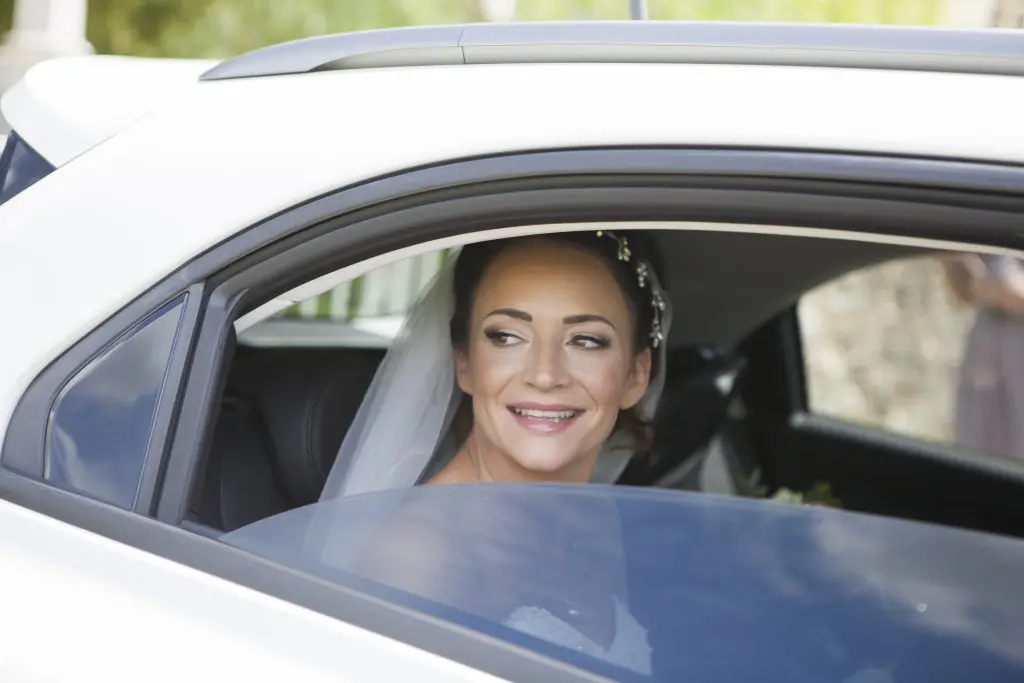
Niki Lawrence, a Freelance Makeup artist from Niki Makeup, advises that it usually takes around 30 minutes for each person’s makeup and 30-45 minutes to style a hairstyle per person. The Bride will usually require one hour for makeup and two hours for both makeup and hair. If you have a lot of people getting ready and need hair and make-up done, why not speak to your hair/make-up artist about having an additional artist to keep things running quicker (this also allows you to sleep a little longer in the morning!)
If you would like any special images of yourself or with your family or bridesmaids after you are ready, this typically takes around 10-15 minutes. Please ensure you leave enough time to do this before you need to go.
The groom/s/groomsmen:
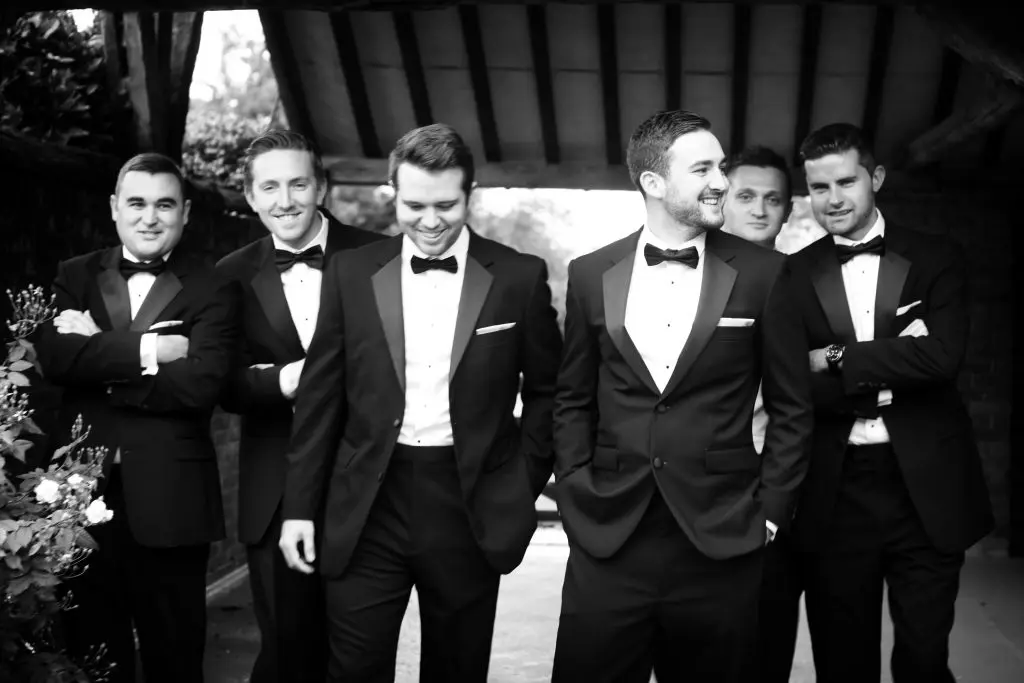
You guys need to look your best, too, so make sure you and the guys have enough time to preen yourselves and feel your best. In my own experience, the guys don’t tend to rely on other professionals for this aspect, but if you are, allow time. If you have a dedicated photographer for the guys, make sure to leave some time to capture stunning shots of you all at your most dapper. In a wedding between a bride and groom, grooms need to arrive at least 45 minutes before the ceremony. It is essential to have time to gather yourselves, ensure that last-minute tasks are covered, and greet the guests. You may find that you need to deal with a mini-crisis, which can occasionally occur the night before or morning of the wedding. It’s possible that the florist can’t find the church, or that Auntie Mabel is calling you repeatedly on your mobile with regrets that she can no longer attend.
Janet Large from the gorgeous venue Luton Hoo advises not to forget that if you are having a civil ceremony, bear in mind that you will need to have an “interview” with your registrar before the ceremony. For grooms, this is usually about 30 minutes before the ceremony start time and takes around 10 minutes.
If you are both grooms, it depends on how you want to do it. You could both arrive together and greet the guests before the ceremony, or you could arrive separately just before… or any combination of the above.
The Journey to the ceremony venue
Time how long it takes you to complete the journey, ideally at a similar time of day to when you will be travelling. Then, for planning purposes, add a little bit on. A little bit! The bride does not need to arrive any more than 5 minutes before a church ceremony and 15 minutes before a civil ceremony (again, you need to have an interview with them before the ceremony). It can be a little awkward if the bride arrives ages before the ceremony, as your guests will also be coming! You can, of course ‘drive about’ near your ceremony venue until it’s the right time if you are an ‘early person’. Lastly, don’t forget to have a couple of alternative routes planned in case there are any changes to the day itself.
The Ceremony
As above’s basic guidelines, it takes the set amount of time for your chosen ceremony. When it’s finished, you will both walk back down the aisle and be able to breathe correctly for the first time in a few hours, and hopefully, it will lead your guests into glorious sunshine. It can take a while for your guests to exit the ceremony area. – If you have under 80 guests, it will take around 5 minutes. For 80-120 guests, it will take around 10 minutes. Anything over this can easily take 15-20 minutes to exit (yes, really!)
Suppose your reception is in the same venue. In that case, you will probably have reception drinks and canapés (if you are having a late meal, then you probably will benefit from canapés for your guests, especially if your ceremony time is early).
The busy bit
If you think all that sounds busy, you’ve seen nothing yet. The ‘Busy Bit’ at any wedding is almost always the time between the ceremony finishing and the meal starting. The absolute minimum time allowed should be 1 hour and 30 minutes for an ‘average’ sized wedding, and 2 hours minimum if you have over 140 guests in the daytime. If you can give yourself more time, then…. I would recommend using it; 2–2.5 hours works well, especially for summer weddings. It’s worth noting that people move much quicker when it’s cold. You can often get away with shorter times during winter weddings. Also, ask yourself if this is when you want professional musicians playing? The guests will be enjoying it, but as a couple, you are likely to be a little busy to appreciate it. Moving music and entertainment to a different part of the day (e.g., the meal) could work better if this is important to you.
Greeting guests – congratulations and hugs can take longer than you might think, but they are certainly a worthwhile expenditure of your wedding day!
Confetti – The opportunity for those you love to throw things (well, paper) at you? Well worth the 10 minutes or so it uses.
Main Group and Family Shots
Canapés and welcome drinks
Some couple shots
Relaxing (never to be underrated)
How long do group shots take?
You can discuss with your photographer how many or few you would like to have. You don’t want to do too many! Just the most important people in their corresponding groups, where the photo will still mean a lot to you, even in 20 years. This part depends on a few things: the number of guests, the number of different shots you want, and mainly, how well-behaved your guests are.
I say this, as this makes a huge difference. Delays during group shots are usually caused by ‘oh he is off having a cigarette’ or ‘oh she’s gone to check in’, all of these will likely make your photographer facepalm and will undoubtedly cause slight delays. I like to make this part of the day run as smoothly as possible by going through the shots wanted before the day, even going so far as to take all of the names of key people so that we can gather them all the quicker on the day. As a rough estimate, I would say that for around 10 shots with an average-sized wedding, it would be around 20-30 minutes.
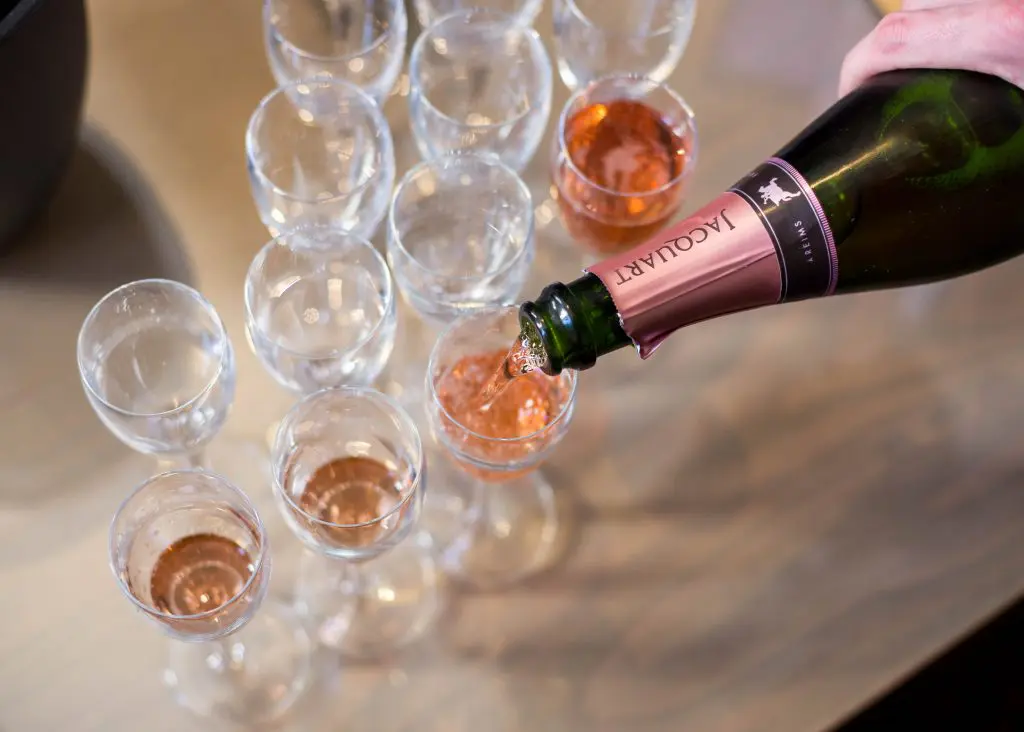
To Canapé or not to Canapé
If budget is an issue, you can utilise good timings to negate the need for specific costs. For example, canapés are usually essential if there is a lengthy period where guests are expected to go between meals. However, if you plan your day with a smaller gap and a later start time (ie, after guests would have had lunch), you can choose to leave out these extras without anyone noticing. You can read about some alternative ways to feed your guests here.
Your Meal
A three-course sit-down meal typically takes around 2 hours at most venues. Sometimes, if you are doing a DIY wedding and have a small catering team, it can take longer. Buffets tend to take less time, unless you have 100s of guests, in which case, even with staggered queuing, time can add up. Generally speaking, if you have a large number of guests, it will take a bit longer, while small weddings tend to take a bit less time. Speak with your venue to help determine how long your meal is likely to take.

Speeches
These are traditionally served at the end of the wedding breakfast (or dinner). However, these days, many couples choose to conduct speeches at a different point of the celebrations. The next most popular time slot is before the meal is served; this can be especially useful if one (or more) of the speakers is actively dreading this duty. It can make the meal beforehand a nervous and unpleasant affair; I have seen grooms unable to eat their (expensive) meal due to their sheer terror of public speaking. If you do decide to go with this, make sure you realise that it will bring your seating time forward by the time it takes to pour the bubbly and do the toasts.
Other couples get the speeches out of the way during the drinks reception. Using the time between the ceremony (or after the meal, if the time of year allows) when your guests are relaxing outside, to deliver the speeches can be an excellent way to do things.
If you’re wondering how long speeches typically take, I can assure you that the duration varies greatly. If you’re happy for your speakers to share their life stories, great; make sure to allow enough time for them to do so. However, it may be worth bearing in mind that the guests may become a little fed up if the speeches continue, particularly noticeable when they occur before the meal and everyone is getting hungry. The best speeches, in all honesty, are around 10 minutes or less. In all my years and in all the speeches I have covered, it is the more succinct speeches which have gone down best with the guests. I would certainly caution against an individual speech lasting beyond 15 minutes, as it becomes increasingly challenging to keep everyone engaged after this point. My record for speeches was just over 4 hours (not a typo), and I am sad to report that I heard quite a bit of grumbling from the guests as I moved around the room, not to mention the others actively sleeping with their heads on the table!
Traditionally, speeches are usually done by the father of the bride, the groom and the best man (in that order). If you don’t have a traditional setup on your top table, no worries! Anyone can say a few words, more frequently each year, a bridesmaid will often say a few words about the bride, or the bride will deliver her speech. If you are a bride reading this and you want to speak, please do so. Just bear in mind that if you are all working around 10 minutes, adding a speaker also adds 10 minutes.
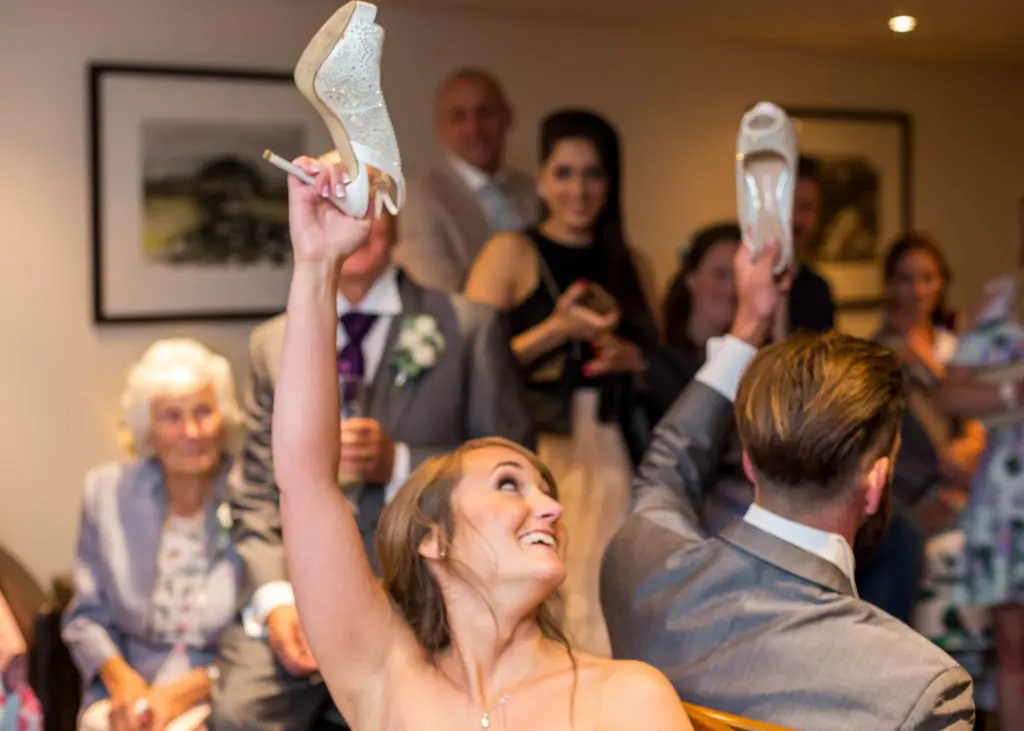
After the Meal, but before the dancing
This is the portion of time between when your wedding meal ends and your evening celebrations begin. In good weather, it would traditionally be the time when you and your guests relax outside the venue, having a drink and greeting your evening guests as they arrive. You might also use this time for some more couple portraits, especially if it times well with dusk or the sunset.
There is only one word of caution with this one. If this gap is too long, the atmosphere from the day can start to fade, taking the energy with it! Perhaps around an hour to 90 minutes is ideal and plenty of time to reset for the evening.
The Evening
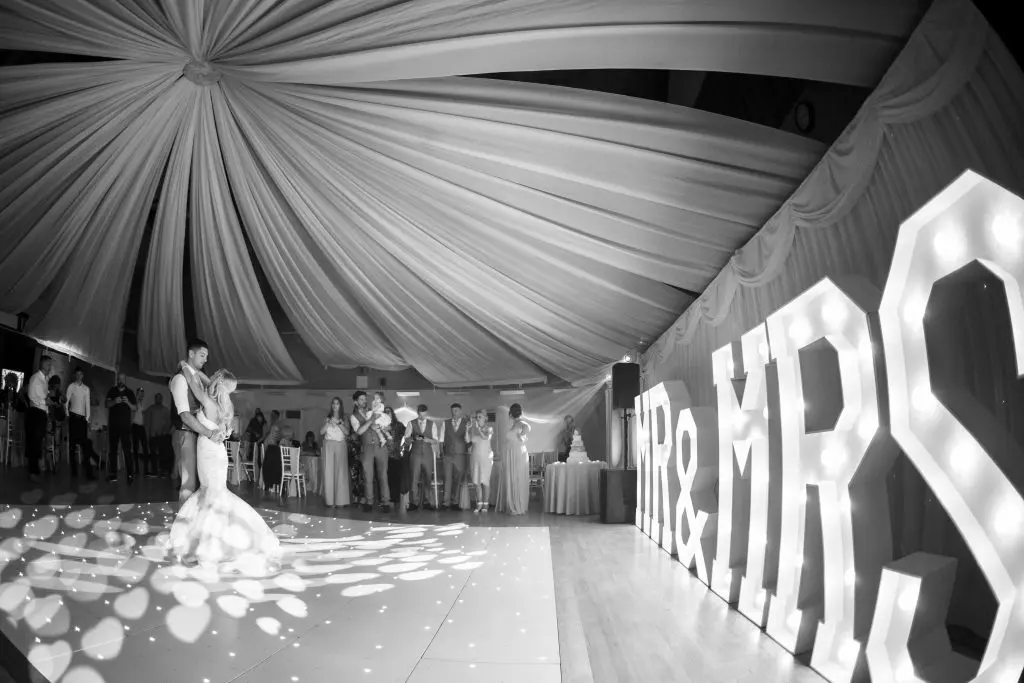
Traditionally, this is when you cut the cake. It allows your evening guests to get involved, and it’s a great photo opportunity for them. The nice thing about serving the cake at this point in the day is that once all your guests are gathered for the cake, it’s easy for you both to lead them over to the dance floor for your first dance. Otherwise, unless you have other plans here, you can relax about the timings.
Ending the evening
This is usually down to your venue, but it’s something important to ask them before you book. Some venues are located in residential zones and have very early music cut-offs, sometimes as early as 11:00 pm or 11:30 pm. However, I have also been at venues that require music to be switched off as early as 10:00 pm. Others have little to no restriction on them, and you can negotiate keeping the evening going into the early hours if you think your guests will not want to stop celebrating!
After the evening, I will leave that bit entirely up to you. From what I’ve heard from my couples, though, you may well not be able to resist sleep as soon as you’re alone!
Extras
It can be a lot of fun to add in extras to your wedding. I have seen some interesting forms of entertainment over the years, from bucking bronco competitions to professional comedians, treasure hunts, quizzes, and circus acts. With big weddings and a lot of time, these can be wonderful additions to the day. Just bear in mind any additional time pressures or linchpins they will add to your day and adjust accordingly.
Hiring a Second Photographer
A second photographer assisting me can certainly make me feel like I have been given additional time at a wedding. Instead of racing between events and moments to ensure I am in as many of the ‘right places’ as possible, I trust that my second shooter is generally in the places that I cannot be. They help to gather additional natural shots and keep the group shots and a couple of images moving as efficiently as possible. If you are considering a second photographer, you can read about all the benefits